Backpacking & multi-stop travel
Backpack Travel Packing List: Stay Mobile Without Overpacking
This guide is for itinerant travel with accommodation and transportation — hostels, trains, buses, cities and frequent moves — not self-supported hiking with shelter, sleep system, cooking gear and food. The goal is a backpack that stays carryable, accessible and adaptable.
Pack clothing around the interval between laundry stops instead of total trip length, cut single-purpose extras, keep documents and valuables accessible but secure, and test the fully loaded backpack before you leave.
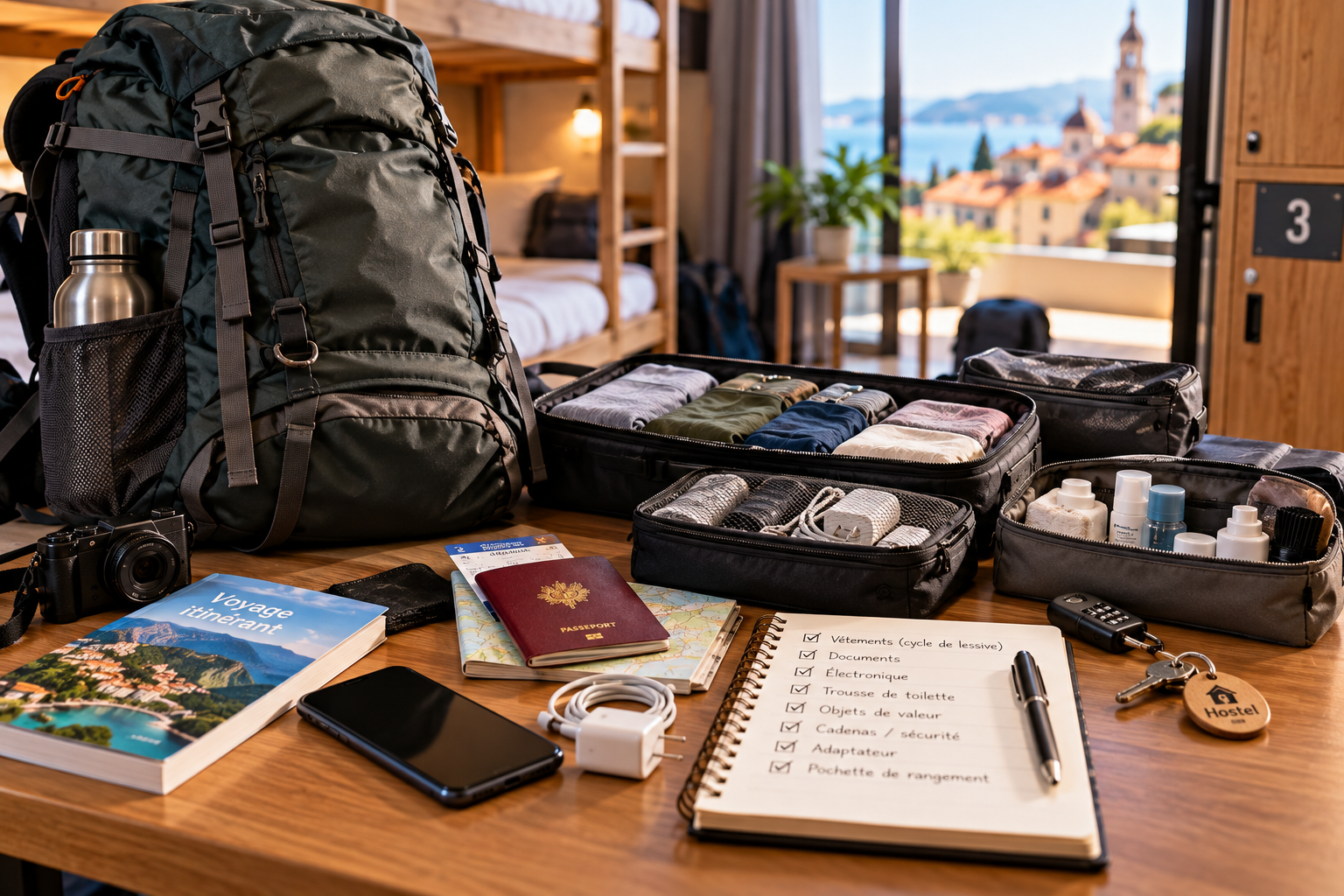
Start with the travel style, not a backpack size
The right pack depends on the itinerary, your body, transportation and any baggage restrictions. Avoid choosing a volume simply because an online list labels it ideal.
First decide what you genuinely need to carry, then make sure the loaded pack remains comfortable. If you plan to fly with it, compare the bag with the baggage allowance for your ticket.
Backpack travel packing checklist
On a mobile itinerary, every item should justify the space, weight and frequency of use it adds.
Documents and security
- Travel documents required for the route
- Separate payment methods when practical
- Secure copies of critical information
- Small lock only when the accommodation setup calls for it
- Important contacts available offline
Versatile clothing
- Tops that work in several combinations
- A limited set of compatible bottoms
- Underwear and socks based on the laundry cycle
- Warm layer suited to the climate
- Rain protection when needed
Toiletries and daily life
- Compact toiletry kit
- Personal medication
- Small towel only when accommodation does not provide one
- Bag for dirty laundry
- Items you actually use every day
Electronics
- Phone and charger
- Plug adapter for countries that require it
- Headphones when useful
- Power bank only after checking the applicable rules
- Laptop or tablet only when the trip truly requires it
Pack for the laundry cycle, not the total number of days
On a long route, one complete outfit per day quickly overwhelms a backpack. Plan instead around the number of days between laundry opportunities and build a small compatible rotation.
Add margin for climate and activities, but avoid duplicates without a clear use case.
Organise the pack by access frequency
Documents, phone, rain layer, medication and transit items should be reachable without emptying the backpack.
Simple organisers can separate clean clothing, laundry, electronics and toiletries, but the purpose is fast access rather than collecting packing accessories.
Hostels and shared accommodation
Check what the property provides before packing a towel, bedding, hair dryer or other just-in-case item. In dorms or shared storage, plan a sensible way to secure important belongings.
A small packable day bag can help when the main backpack stays at the accommodation, but it should solve a real need.
Avoid the automatic “hostel checklist”
A travel towel, lock, earplugs or day bag can be useful depending on the property, locker setup and itinerary. None of them should be treated as mandatory by default.
A practical layout is to keep transit essentials in an immediate-access zone, daily-use items in the middle and spare clothing or rarely used items deeper in the pack.
The most useful test: carry the loaded backpack before the trip
How the loaded pack feels often exposes overpacking better than an abstract target weight.
- Pack everything you currently plan to take.
- Weigh the backpack if transportation has a limit.
- Carry it loaded for a while.
- Walk and climb a few flights of stairs.
- Remove heavy items with no clear use.
- Make sure frequently used items stay accessible.
When the route crosses several countries
Track travel documents, visas or authorisations, health, insurance, payment access and connectivity separately for each destination and transit point. Page language never determines entry requirements.
Useful official sources
These links may help with the international parts of an itinerary. They do not by themselves establish the rules that apply to every destination, transit point or transportation mode.