Backpacking & multi-stop travel
Backpack Travel Packing List: Pack Light for Hostels and Multi-Stop Trips
This checklist is for mobile backpack travel — hostels, trains, buses, cities and frequent accommodation changes — not self-supported backcountry hiking with shelter, sleep systems, cooking gear and food. The goal is a bag that stays portable, accessible and adaptable.
Pack clothing around a laundry cycle rather than the full trip length, limit single-purpose items, keep documents and valuables accessible but secure, and test the loaded backpack before departure.
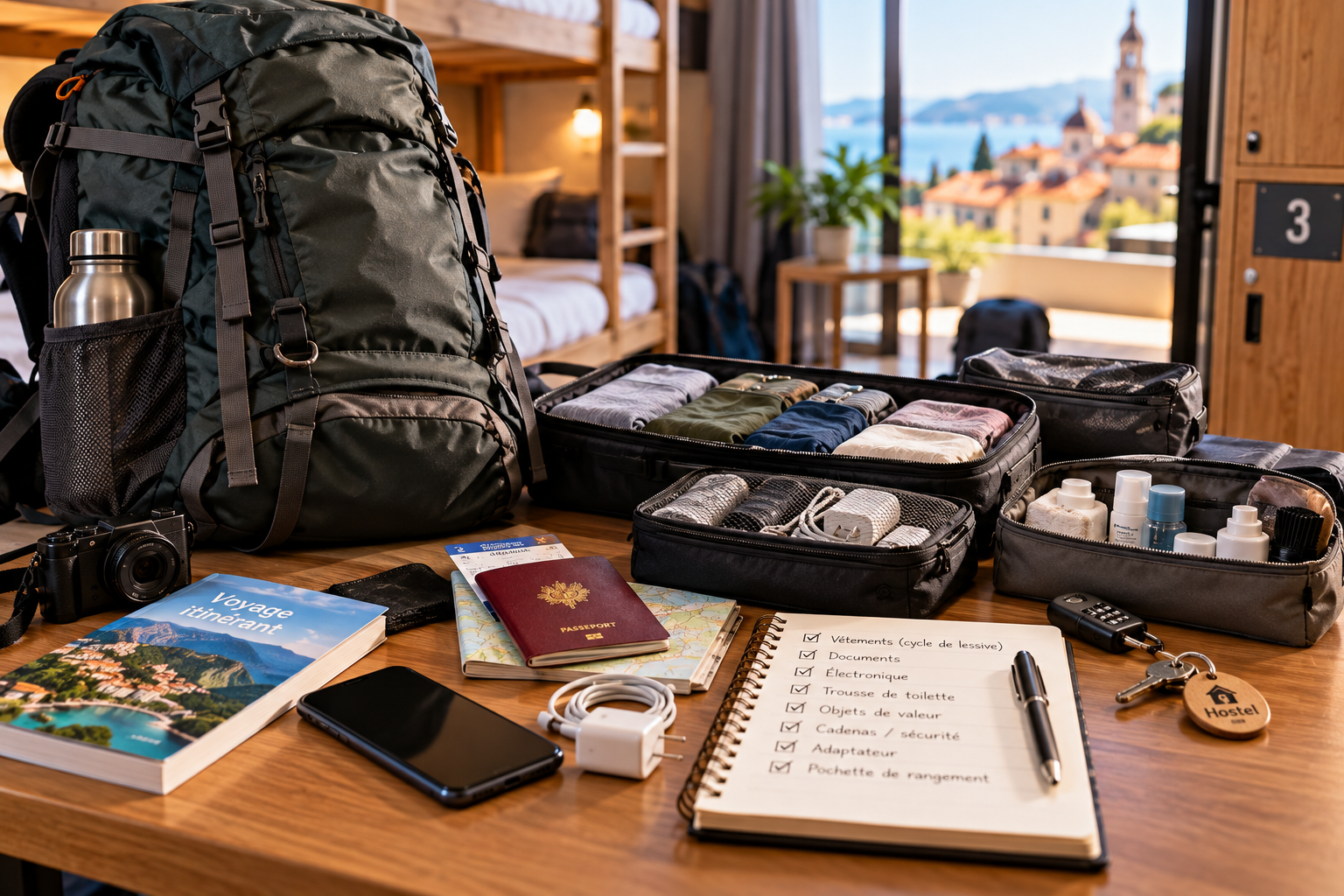
Start with the travel style, not a backpack size
The right bag depends on your itinerary, body, transport and any airline restrictions. Do not choose a volume only because an online list calls it ideal. Decide what you genuinely need first, then check that the loaded bag remains comfortable to carry.
If you plan to take the backpack into an aircraft cabin, compare its actual dimensions and weight with the allowance on your ticket and use the carry-on packing list.
Backpack travel packing list
Documents and security
- Required travel documents
- Separate payment methods where practical
- Secure copies of critical information
- Small lock if accommodation makes it useful
- Important contacts available offline
Versatile clothing
- Tops that work in several combinations
- A limited number of compatible bottoms
- Underwear and socks based on the laundry cycle
- Warm layer suited to the climate
- Rain or weather protection when needed
Toiletries and daily use
- Compact toiletry kit
- Personal medication
- Small towel if accommodation does not provide one
- Laundry bag
- Items you actually use every day
Electronics
- Phone and charger
- Plug adapter for the countries visited
- Headphones if useful
- Power bank only when it solves a real need
- Laptop or tablet only if the trip requires it
Pack for the laundry interval, not the full trip
On a long itinerary, packing a complete outfit for every day quickly makes the bag too large. Decide how many days you can realistically travel between washes and build a small rotation of compatible clothing around that interval.
Add a sensible margin for climate and activities, but avoid duplicates with no clear use case.
Organize by access frequency
Travel documents, phone, rain layer, medication and items used in transit should be reachable without emptying the backpack. Spare clothing and rarely used items can sit deeper in the bag.
Simple packing pouches can separate clean clothes, laundry, electronics and toiletries. The goal is not to add organizers for their own sake; it is to retrieve one item without rebuilding the entire bag at every stop.
Hostels and shared accommodation
Check what the property provides before packing items “just in case”: towel, bed linen, hair dryer or locker, for example. In dorms or shared storage, plan an appropriate way to secure important belongings and avoid carrying unnecessary valuables.
A small packable day bag can be useful when the main backpack stays at the accommodation, but only if it has a clear role in the trip.
The most useful test: carry the loaded backpack
- Lay out the full planned load.
- Weigh the bag if transport has a limit.
- Carry it for a realistic period.
- Walk and use stairs with it.
- Remove heavy items without a clear purpose.
- Check that frequently used items remain accessible.
This test often exposes overpacking better than an abstract weight or capacity target.
If the route crosses multiple countries
International backpack travel also requires tracking documents, visas or authorizations, health, insurance, payments and connectivity for each destination. Use the international travel checklist alongside this packing list.