Business travel
Business Trip Packing List: Work Essentials, Clothing and Documents
Business travel should be packed around the schedule, work equipment and employer requirements. Protect the items that could disrupt the assignment first, then add only the personal items needed for the trip.
Start with the work schedule, pack clothing and equipment tied to scheduled meetings, keep critical documents and devices accessible, and check your organisation’s travel, security and expense policies before departure.
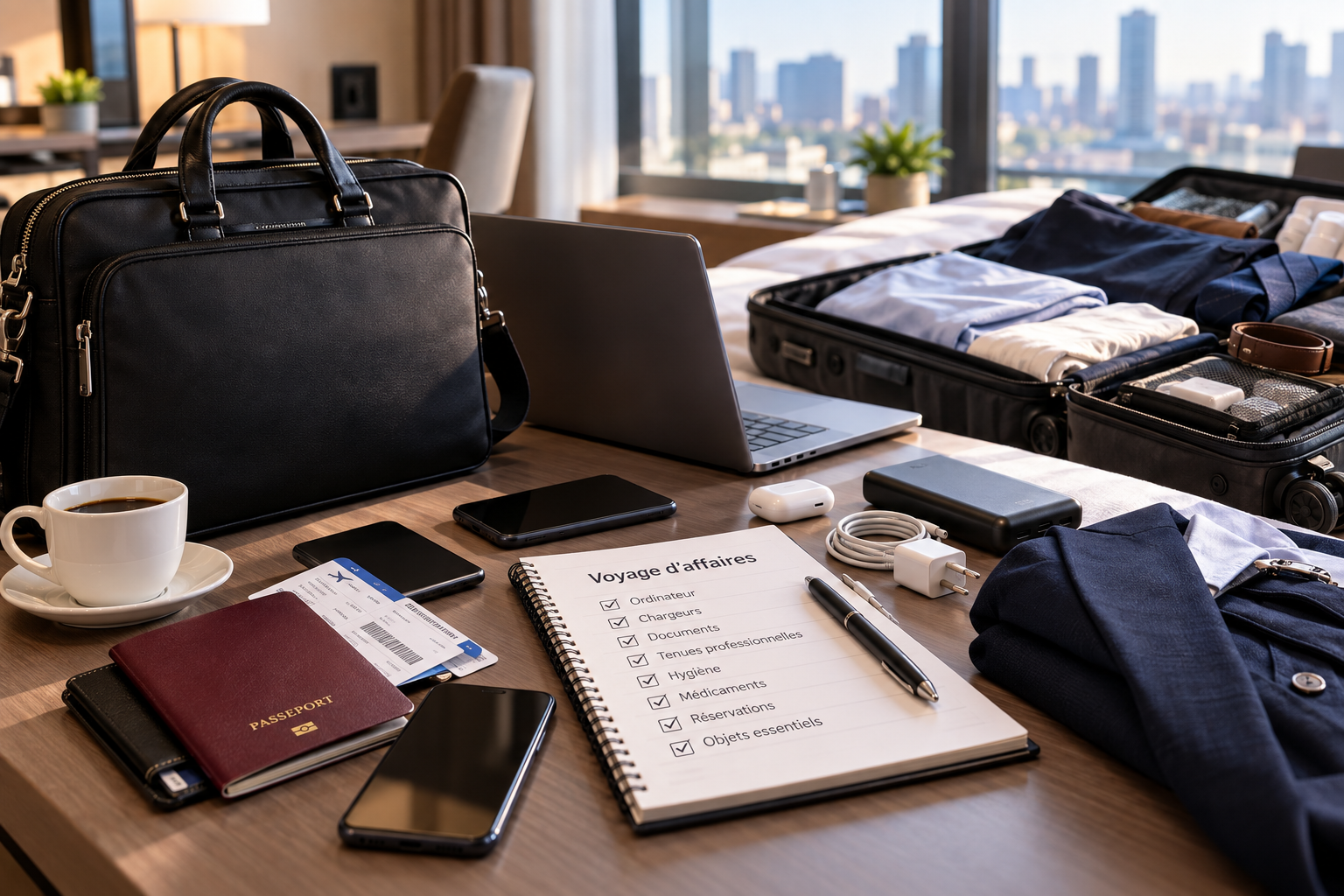
Four essential categories for a business trip
Start with items whose absence could directly affect the work assignment.
Work and documents
- Work laptop when required
- Essential charger and adapters
- Phone and required authentication methods
- Meeting documents, badges and access information
- Mission-specific equipment
Work clothing
- Outfits matched to scheduled meetings
- Practical clothing for transit
- Underwear and sleepwear
- Shoes suited to the itinerary
- Weather layer when needed
Travel and access
- Required travel documents
- Bookings and itinerary
- Approved payment methods
- Meeting and lodging addresses
- Keys and critical personal items
Toiletries and health
- Toiletry kit sized to the trip
- Personal medication
- Glasses or contacts
- Only the care products you use
- Small items that help between meetings
Build the packing list from the schedule
Trip length alone does not determine what you need. Identify situations that require specific clothing or equipment: presentations, trade shows, site visits, business dinners, laptop work or long periods on foot.
Then build compatible outfit combinations instead of treating every day as a completely separate wardrobe.
Protect work continuity
Keep professional equipment together and verify chargers, cables, adapters and specialised accessories before closing the bag.
For essential files, use only a backup method approved by your organisation, such as authorized offline access or managed professional storage.
Open the critical presentation, file or tool before you leave. “It should be synced” is not a test.
Professional clothing without unnecessary duplicates
Start with the most restrictive item — jacket, shoes, formal clothing or required equipment — and build the rest around pieces that work together.
If an important meeting happens soon after arrival, keep difficult-to-replace items with you when practical and permitted.
A short-trip example to adapt
For two nights and three days with daytime meetings, a possible baseline is the outfit worn in transit, a few interchangeable work tops, one or two compatible bottoms, a jacket if needed, meeting-appropriate shoes, underwear, socks and sleepwear.
Let the schedule decide what stays. Remove formal clothing if it serves no purpose; make specialised equipment a priority when the assignment requires it.
Add employer rules to the checklist
Check booking procedures, expense documentation, approved hardware, remote-access rules, data handling, authentication requirements and incident procedures for a lost device.
Do not use a network, storage location or backup copy merely because it is convenient if your organisation does not approve it. Employer policy and applicable obligations take precedence over this guide.
Keep mission-critical items accessible
Keep necessary travel documents, phone, payment access, essential medication and work equipment whose absence would immediately affect the trip within reach.
For air travel, check the baggage allowance for your ticket and the applicable battery rules separately before distributing electronics between bags.
Track pre-trip tasks as well as packed items
Confirming a meeting, checking times, preparing account access, downloading an approved file or completing a required form are tasks rather than packing items. Track them in a separate pre-travel checklist.