Work travel
Business Trip Packing List: Work Travel Checklist
A business trip should be packed around meetings, work equipment and the few items that would be difficult to replace before an appointment. Build the list around the job first, then add personal essentials for the length of the trip.
Start with the work schedule, pack the clothing required by actual meetings, keep your laptop, chargers, documents and critical items accessible, then add only the personal items needed for the trip length.
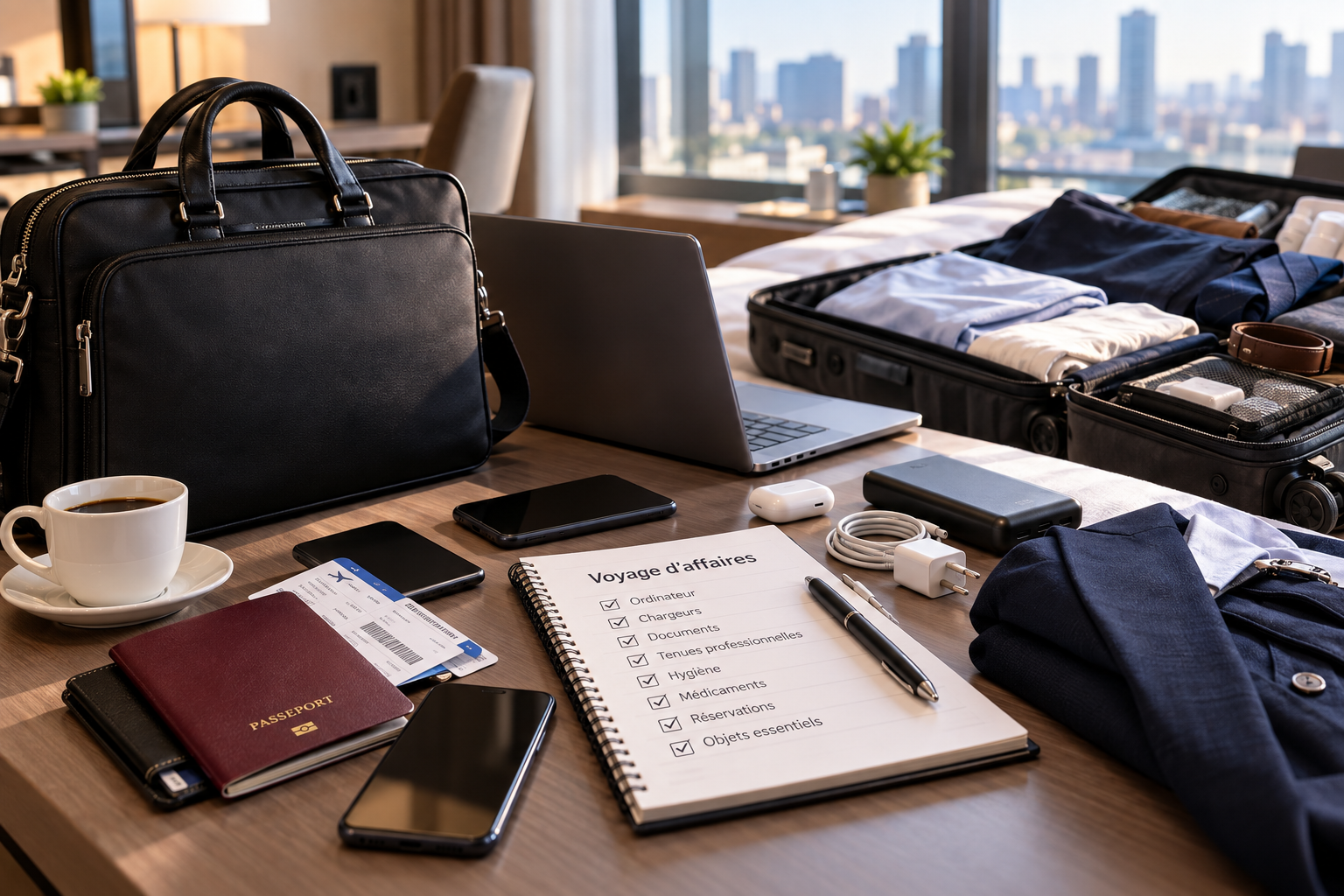
Business trip packing checklist: four essential groups
The main difference from a general travel list is the cost of a missed work item. A charger, meeting document or required outfit can be hard to replace minutes before an appointment, so organize the bag around professional needs before adding everything else.
Work and documents
- Work laptop when needed
- Laptop charger and required adapters
- Phone and authentication tools you rely on
- Meeting documents, badges or access information
- Notebook, pen or job-specific equipment
Professional clothing
- Outfits matched to the meetings on the calendar
- A practical option for transit and informal time
- Underwear and sleepwear
- Shoes appropriate for the itinerary
- A warm or rain layer when relevant
Travel and access
- Required ID or travel documents
- Bookings and itinerary
- Payment methods
- Meeting and hotel addresses
- Keys and essential personal items
Toiletries and health
- Toiletries matched to trip length
- Personal medication
- Glasses or contacts
- Care products you actually use
- Small items that help you stay presentable between meetings
Build the bag from the work schedule
Trip length alone does not tell you what to pack. A three-day trip might include two formal meetings, a client dinner and a travel day, or three casual workdays in the same office.
List the situations that force a clothing or equipment choice: presentation, conference, site visit, dinner, laptop work or long walks between appointments. Then build a small set of compatible outfits instead of packing a completely separate look for every day.
Protect work continuity
Keep professional equipment together in one area of the bag or in the personal item that stays with you. Physically check the laptop charger, phone cable, adapters and any meeting-specific accessory before closing the luggage.
For essential files, keep an approved backup route that follows your company’s security rules: authorized offline access, a managed cloud location or another company-approved option. The goal is not to copy sensitive data carelessly; it is to prevent a simple connection problem from blocking the meeting.
Open the presentation, document or tool you will actually use before departure. “It should be synced” is not a verification step.
Professional outfits without unnecessary duplicates
Start with the most restrictive piece — blazer, formal shoes, required uniform or other meeting-specific clothing — then choose the rest around a compatible palette. On short trips, several tops that work with the same bottom can reduce volume without forcing you to repeat the exact same outfit.
If an important meeting starts soon after arrival, keep the difficult-to-replace pieces with you when practical. That reduces dependence on a checked bag if it is delayed.
Example for a two-night, three-day business trip
For a typical trip with daytime meetings, one starting point is the outfit worn in transit, two work-ready tops, one or two compatible bottoms, a blazer if the context requires one, one pair of meeting-appropriate shoes, underwear and socks for each day, sleepwear and a light casual option for downtime.
Then add what the assignment requires. If no appointment calls for formalwear, remove it. If a site visit needs protective or specialized equipment, that equipment becomes a priority. The schedule should decide, not a generic packing list.
What should stay easy to reach
Keep trip documents, phone, payment methods, essential medication and any work item whose absence would immediately compromise the trip within easy reach. If you are flying, also check the carry-on packing list and current battery rules before splitting electronics between bags.
Do not forget the tasks outside the suitcase
Work travel also includes actions that never go in a bag: confirming a meeting, checking times, preparing access credentials, downloading a document, checking a booking or completing a requirement. Use the pre-travel checklist for that part.
For the general items shared by most trips, return to the travel packing list.