Air travel
Cabin Baggage Packing List: What to Pack in Hand Luggage
A reliable cabin baggage checklist starts with the baggage allowance for your ticket, then keeps airline terms, security screening and battery or dangerous-goods rules clearly separate.
Check the airline’s item count, dimensions and weight first. Then organise documents, medication, electronics, clothing and liquids around the rules that actually apply at your departure and connection points.
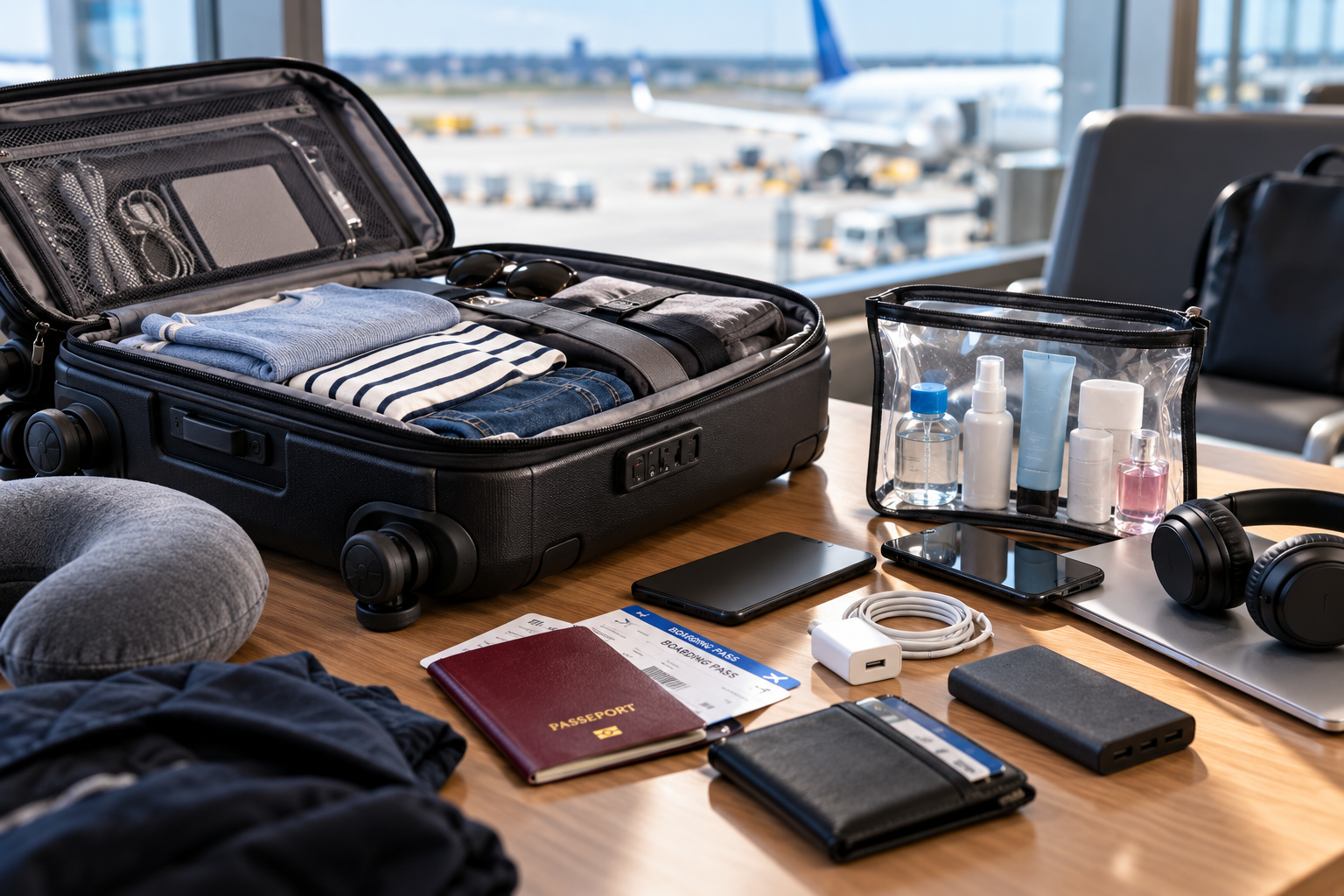
Start with the cabin baggage allowance on your ticket
Use the booking and the airline’s own baggage page to confirm how many pieces are included, whether a personal item is separate from the overhead bag, the size and weight limits, and any conditions tied to the fare you bought.
Do not reuse measurements from another airline or an older trip. Commercial baggage allowance depends on the carrier, ticket and sometimes the itinerary.
If several airlines or separate tickets are involved, check each flight segment independently.
Three rule layers that should not be mixed together
Commercial allowance determines what your ticket includes in the cabin: item count, size, weight and possible fees.
Airport security rules cover issues such as liquids and prohibited articles at screening. They depend on the regime that governs the actual departure or transit checkpoint.
Lithium batteries and other dangerous goods are governed by another layer of rules. A bag can meet the airline’s size limit and still contain an item that is prohibited or conditional.
Cabin baggage packing checklist: the essentials
Keep in the cabin what you need during the journey and what would be difficult to replace quickly.
Documents and access
- Required passport or identification
- Boarding pass and useful booking details
- Payment methods
- Arrival information you may need
- Keys and critical personal items
Electronics
- Phone and charging cable
- Laptop or tablet when needed
- Required chargers and plug adapter
- Headphones or earbuds
- Power bank only after checking the rules that apply
Clothing
- Outfits matched to trip length and itinerary
- Underwear and socks
- Sleepwear when needed
- Warm or rain layer
- Backup outfit when the context justifies it
Toiletries and health
- Essential medication
- Toiletries compatible with screening rules
- Glasses or contact lenses
- Small items useful in transit
- Empty bottle or container if useful after screening
Cabin baggage liquids: check the screening regime
Do not automatically reuse a limit from another country. Check the authority or airport responsible for the screening checkpoint you will actually pass through.
A return flight or connection may use a different regime. When the itinerary is unknown, this guide deliberately avoids presenting any numeric limit as a worldwide rule.
Batteries, power banks and electronic devices
Lithium batteries, spare batteries and power banks need their own check. Requirements depend on battery type and capacity, the applicable aviation regime and carrier policy.
If a cabin bag is taken at the gate and placed in the hold, also confirm which batteries or devices must be removed before the bag is handed over.
Organise the bag for screening and the journey
Keep documents, medication, electronics and anything likely to be requested at screening in an accessible area instead of burying them under clothing.
Items needed only after arrival can sit deeper in the bag. This reduces repacking at security and during the trip.
Travelling with cabin baggage only
If the cabin bag holds the whole trip, build outfits around a small set of compatible pieces, then add toiletries, electronics and activity-specific needs.
Cut duplicates and easily replaceable items first, not required documents, essential medication or mandatory equipment.
Final check before closing the bag
- Compare the bag with the baggage allowance for your ticket.
- Check the security rules for every relevant departure or transit point.
- Review liquids and regulated items.
- Verify the batteries and devices you are carrying.
- Keep documents, medication and critical items accessible.
- Recheck official information shortly before departure.