Trip preparation
Travel Packing List: A Practical Checklist for Any Trip
A useful packing list starts with the essentials, then adapts to trip length, weather, activities and the luggage you are actually using. The goal is to pack what serves the trip, not to copy an oversized universal inventory.
Start with required documents and hard-to-replace essentials, then add clothing, toiletries, electronics and activity-specific needs. Assign each item to a bag and mark it complete only when it is actually packed or ready.
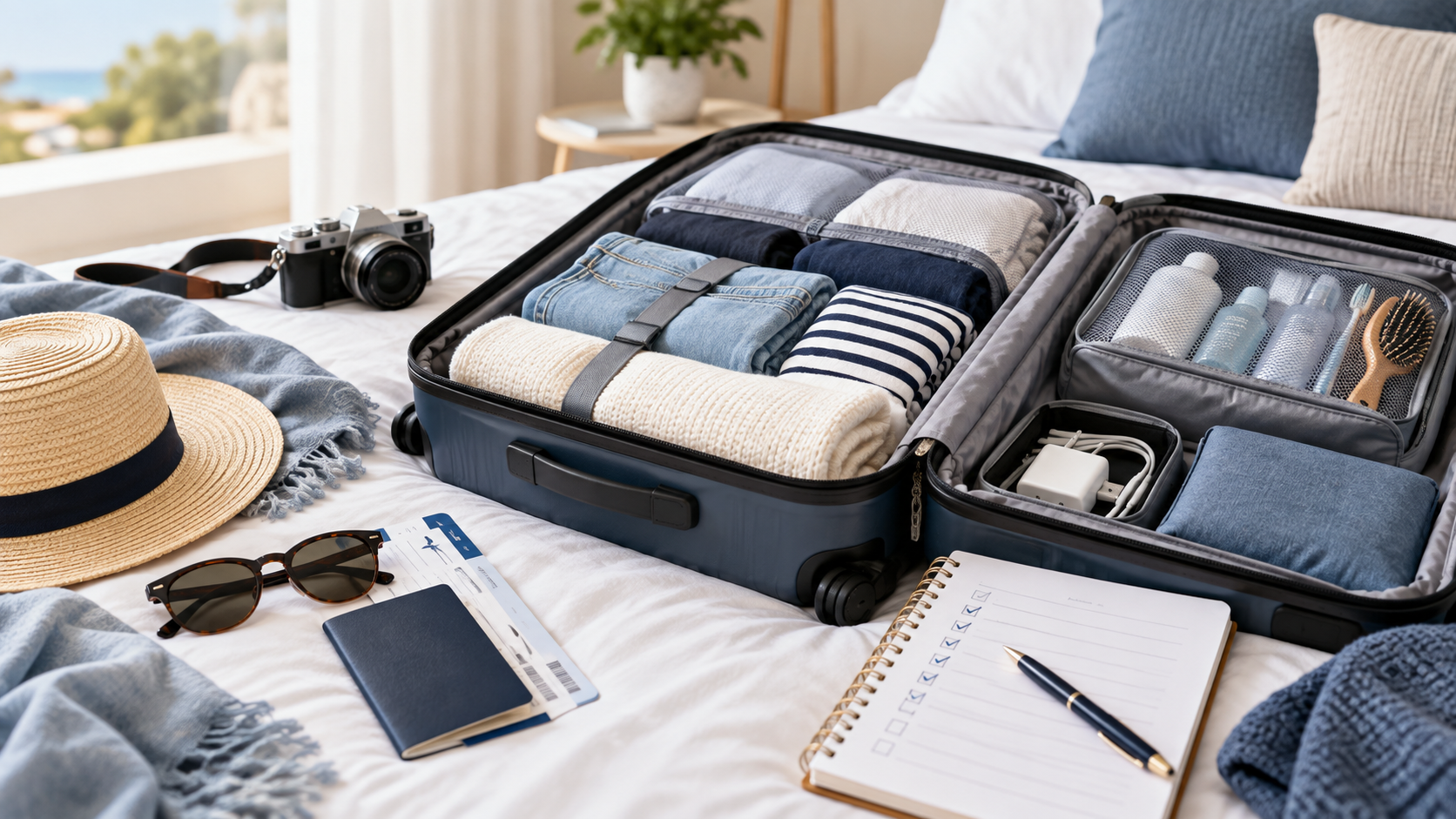
Travel packing checklist: start with the essentials
Use the list as a baseline, then shorten or expand it for the trip length, climate, activities, transportation and baggage setup.
Documents and access
- Passport or identification required for the trip
- Bookings and transportation details
- Suitable payment methods
- Addresses and supporting documents you genuinely need
Clothing
- Outfits matched to the trip length and schedule
- Underwear and sleepwear
- Shoes suited to planned activities
- Warm or rain layer when needed
Toiletries and health
- Basic toiletry kit
- Personal medication and supporting documents when required
- Sun protection or context-specific care
- Glasses, contacts and personal aids
Electronics
- Phone and charger
- Headphones when useful
- Plug adapter when needed
- Only the devices the trip actually calls for
Adapt the list before you start filling the bag
Answer four questions first: how long are you going, what weather should you expect, what activities are planned, and what luggage will you use?
For a short trip, favour pieces that work together. For a longer trip, reliable laundry access may replace several duplicate outfits. A checked suitcase, cabin baggage and a backpack also need different organisation.
What should stay easy to reach?
Keep items you may need during the journey accessible: travel documents, phone, payment method, essential medication and critical arrival information.
For flights, border crossings and batteries, check your itinerary, carrier and responsible authorities instead of relying on a generic rule.
A packing method that reduces forgotten items
Separate the decision to bring an item from the decision about where it belongs.
- List the non-negotiable essentials first.
- Add items required by planned activities.
- Assign each item to a specific bag.
- Gather items before putting them away.
- Check an item off only when it is ready.
- Recheck documents and critical items immediately before departure.
Build the list by priority
Start with things that are essential or difficult to replace: required travel documents, important medication, payment access, phone or mandatory equipment. Daily-use items come next, followed by items tied to a specific activity.
On a long trip with reliable laundry access, plan around the interval between washes rather than the total number of days. That is a method, not a universal quantity.
Packing is not the same as a pre-travel checklist
Some important tasks do not go in a bag: checking entry requirements, confirming a booking, charging a device, preparing home or completing an administrative step. Track those actions separately.
Match the checklist to the kind of trip
A weekend, a business trip, cabin-baggage-only air travel, an international trip and a multi-stop backpacking route have different priorities. Use the specialised guide when the context becomes more specific.
Useful official sources
These links are useful starting points for readers of this locale. They do not by themselves establish the law or rule that applies to a particular trip.