Travel preparation
Travel Packing List: A Practical Checklist for Every Trip
A practical packing list starts with essentials, then changes with trip length, weather, activities and luggage type. Use this structure to decide what belongs on your list before you start filling a bag.
Start with required documents and essential items, then add clothing, toiletries, electronics and activity-specific needs. Assign each item to a bag and check it off only after it is actually packed.
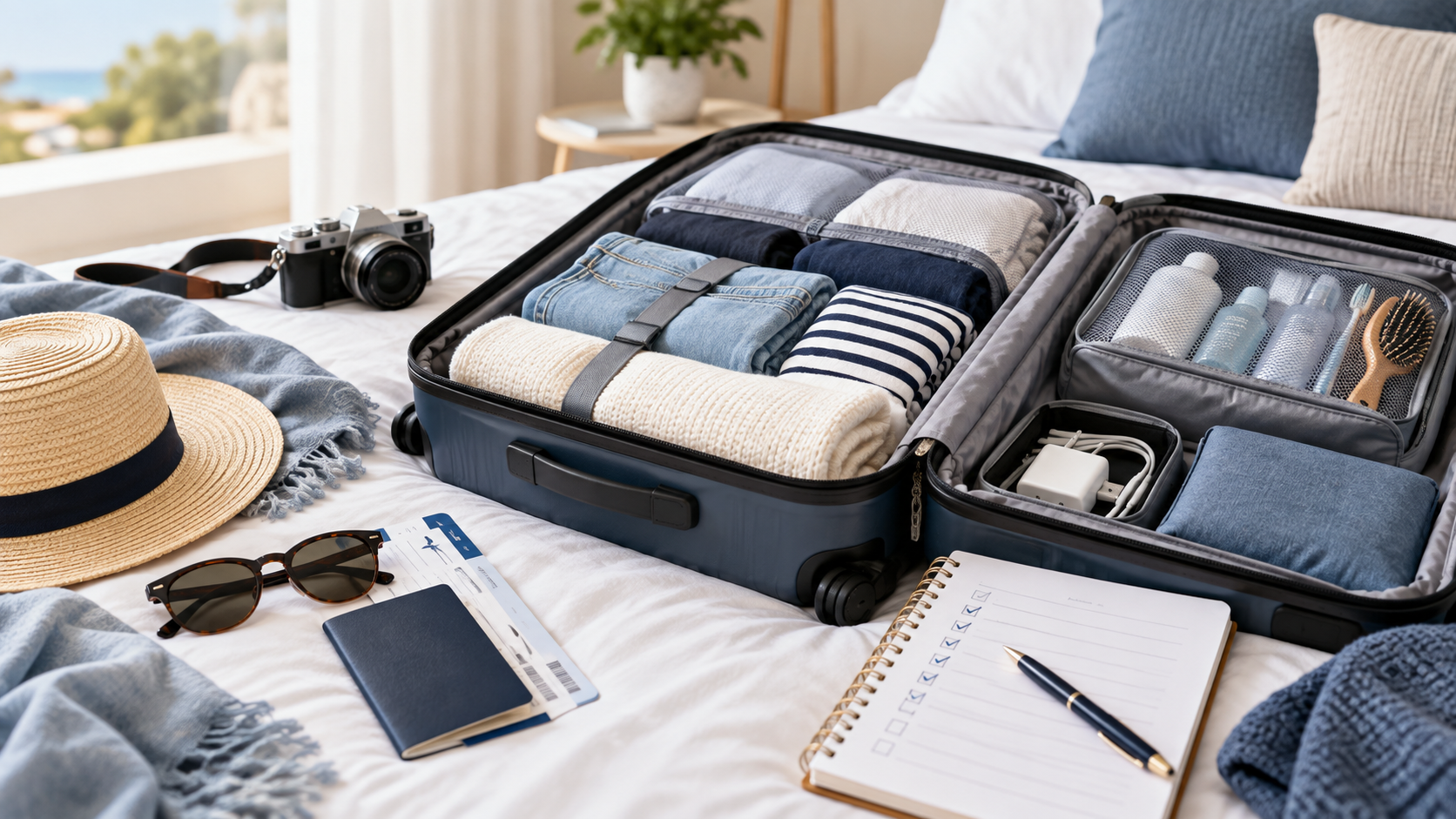
Travel packing checklist: the essentials
A useful packing list is not a universal inventory to copy item by item. Start with a core list, then adjust it for trip length, weather, planned activities, transportation and the luggage you will actually use.
Documents
- Passport or other required identification
- Bookings and transportation details
- Appropriate payment methods
- Useful contacts and trip-specific documents
Clothing
- Outfits matched to the length of the trip
- Underwear and sleepwear
- Shoes for the activities you plan
- Warm or rain layers when relevant
Toiletries and health
- Toiletry kit
- Personal medication and prescription information when needed
- Sun protection or other destination-specific items
- Glasses, contacts and personal care items
Electronics and personal items
- Phone and charger
- Headphones or earbuds
- Power adapter when required
- Items needed for your planned activities
Adapt the list before you pack
Use four inputs before adding items: how long the trip lasts, what weather to expect, what you will do and which bag you will carry. This keeps the checklist tied to the actual trip instead of filling it with “just in case” items.
Trip length
For a short trip, use clothing that works in multiple combinations and avoid duplicates. For a longer stay, consider whether laundry is available before packing a separate outfit for every day.
Weather and activities
The same destination may require a very different list in another season or with a different itinerary. Hiking, a formal dinner, a beach day or a business meeting each add specific needs.
Luggage type
A checked suitcase, carry-on and backpack should not be organized the same way. Keep what you may need in transit accessible and place less frequently used items deeper in the bag.
What should stay within reach?
Keep items that may be needed during the journey easy to access: travel documents, phone, payment method, essential medication, charging equipment and a small set of personal items.
For flights or international travel, baggage and entry rules depend on the carrier, itinerary and destination. Check official sources before departure rather than relying on a generic packing list.
How to pack without forgetting anything
- List the items that are essential to the trip.
- Add what is specific to planned activities.
- Assign each item to a specific bag.
- Gather items before placing them into luggage.
- Check an item off only when it is actually packed.
- Do a final check of critical documents and items before leaving.
This separates the decision “do I need it?” from “where does it go?” and reduces the risk of preparing an item but leaving it outside the bag.
A packing list is not the same as a pre-travel checklist
Travel preparation also includes tasks that do not belong in any bag: checking documents, confirming bookings, arranging payment options, charging devices, preparing your home or finishing an administrative step.
For that part of the trip, use the pre-travel checklist.
Adapt the checklist to the type of trip
For two or three days, the main goal is to stay compact and avoid duplicates: see the weekend packing list. For work travel, use the business trip packing list. For flights, see the carry-on packing list. For cross-border requirements, use the international travel checklist. If you move between several stops with one main bag, the backpack travel packing list is more specific.